Devon Hornby LMT, ABT
In winter, life disappears.
Or so it seems.
The trees are bare.
The fields are quiet.
The world draws inward.
But beneath the surface, something essential is gathering.
Roots thicken.
Seeds harden.
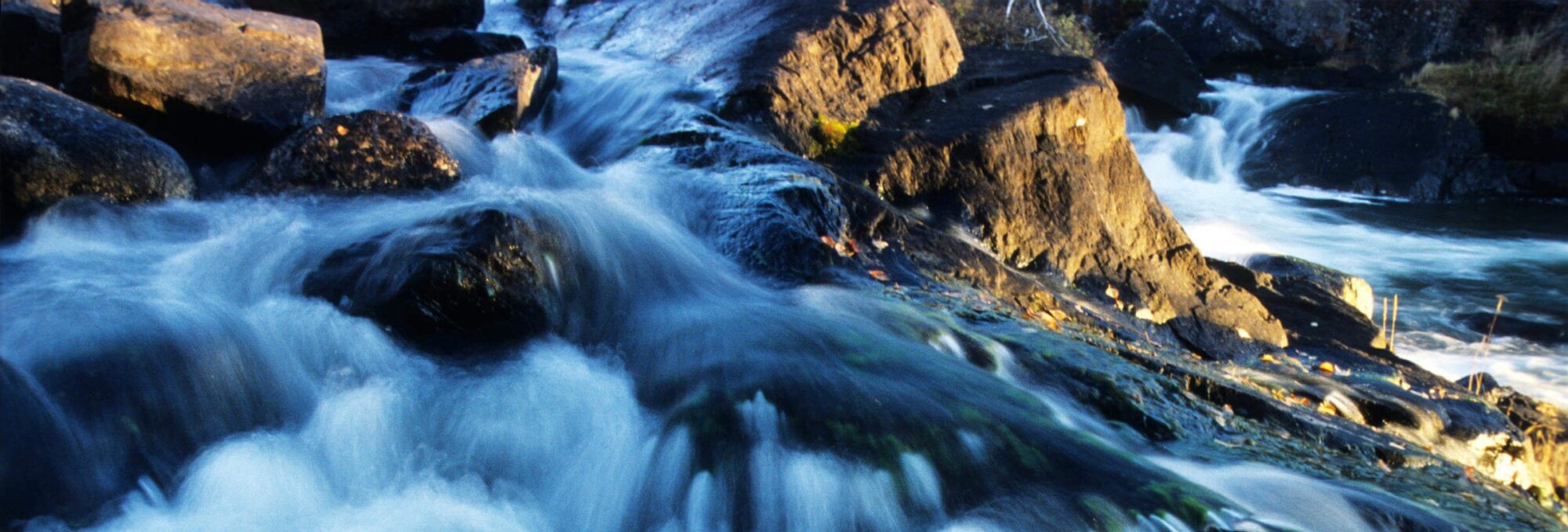
Water moves silently through stone.
Nothing is gone.
Everything is conserving strength.
In Five Element teaching, this is the realm of Water.
Not the crashing wave, but the deep aquifer.
Not expression, but essence.
Water is the source.
Essence rather than effort
In the language of Chinese medicine, Water stores jing — our essential vitality.
Jing is not the energy we spend day to day.
It is the deeper inheritance that makes energy possible at all.
It is our constitutional strength.
Our resilience.
Our capacity to recover.
If Wood is growth, Fire is radiance, Earth is trust, and Metal is refinement — Water is what remains when everything unnecessary has fallen away.
It is the root system.
Without strong roots, nothing flourishes for long.
With deep roots, life renews itself naturally.
The culmination and the beginning
Water holds a beautiful paradox.
It is both the end of the elemental cycle and the beginning.
Metal condenses and clarifies.
Energy settles and becomes dense, quiet, essential.
This condensation becomes Water — stored potential.
And from that still reservoir, Wood rises again.
A sprout from darkness.
A new cycle beginning.
So Water is not collapse.
It is gestation.
The fertile dark.
The place where life reorganizes itself without our interference.
The virtue of Water
Each element carries a virtue.
The virtue of Water is often described as wisdom — but not intellectual knowledge.
This is a deeper knowing.
Instinct.
Trust in the unknown.
The courage to rest.
In the virtue-healing teachings of Wang Fengyi, illness often arises when we push against the natural order of life.
Water reminds us of something radical:
We do not have to force our becoming.
We are already being lived.
Sometimes the most healing act is to conserve, to listen, to stop trying to improve ourselves and simply return to what is fundamental.
The indestructible point
In Vajrayana Buddhist language, the essential seed is called bindu or tigle — the luminous point of our fundamental awakened nature.
Small.
Indestructible.
Present from the beginning.
Not something to build.
Something to uncover.
Water feels like this.
A quiet drop at the center of our being.
Untouched by history.
Untouched by trauma.
Untouched by time.
When we settle deeply enough, we discover something surprising:
Nothing is actually missing.
There is already a wellspring here.
Practicing Water
Water practice is simple and subtle:
Longer sleep
Less striving
Warmth
Stillness
Listening to the kidneys and low back
Breathing into the pelvic bowl
Letting silence do the work
Not adding more.
Protecting what is essential.
Because from this depth, everything else grows.
Next week:
We’ll explore how this elemental source relates to trauma — and how reconnecting with essence helps us move from survival into true resilience.