Devon Hornby LMT, ABT
In the exploration of movement and the Wind element, we saw how too much activity—too many directions, too much internal motion—can lead to fragmentation and overwhelm.
But there is another imbalance that often sits quietly beneath this.
Not excess movement…
but insufficient rest.
When Rest Disappears
Many people move through their days in a near-continuous state of doing.
Even in moments that appear restful, the mind remains active—planning, reviewing, anticipating what comes next.
The body may pause,
but the system does not truly settle.
Over time, this creates a particular kind of fatigue:
- a heaviness that doesn’t resolve with sleep
- difficulty concentrating or initiating tasks
- a subtle sense of depletion
- cycles of pushing followed by collapse
In this state, what we often call procrastination can begin to appear.
But again, this is not a failure of discipline.
It is often the system asking—sometimes quietly, sometimes forcefully—for restoration.
The Nature of Water
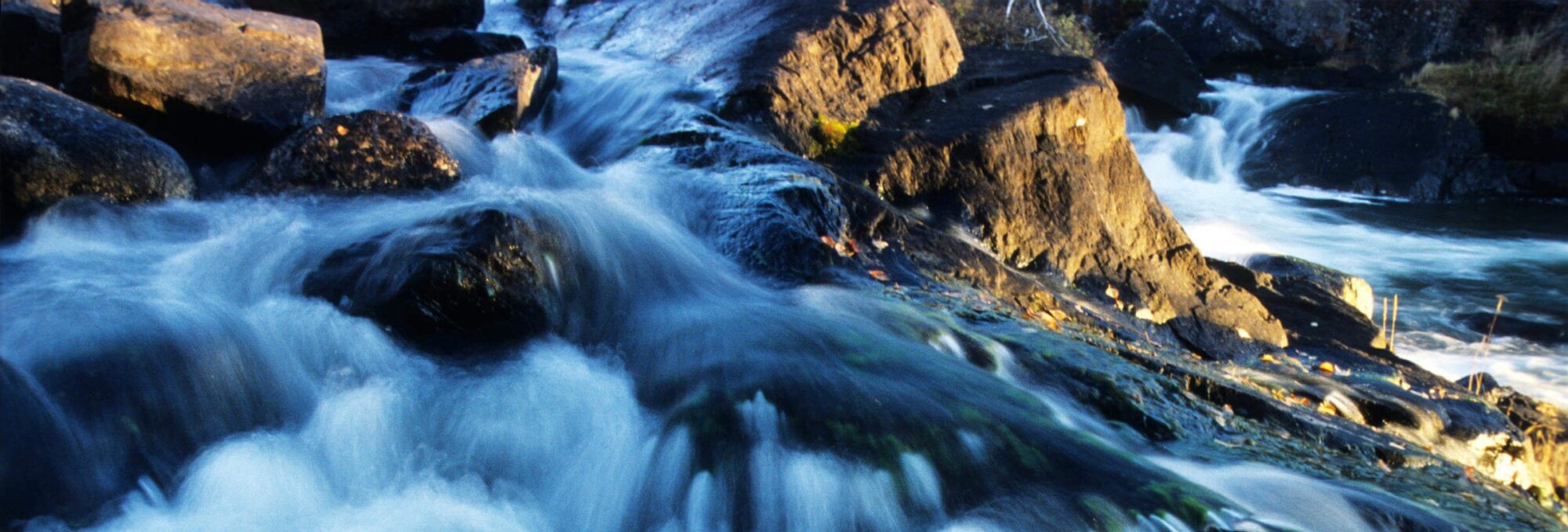
Within the elemental framework, Water represents depth, stillness, and renewal.
It is the aspect of the system that allows for restoration.
Where Wind initiates movement,
Water receives and replenishes.
Without Water, movement becomes unsustainable.
The system may continue for a time through effort alone, but eventually something gives way—focus, motivation, or the capacity to continue.
Avoidance vs. True Rest
One of the more subtle challenges is that not all forms of stopping are restorative.
There is a difference between avoidance and rest.
Avoidance often feels restless:
- distracted scrolling
- low-grade agitation
- a sense of time slipping away without renewal
True rest has a different quality:
- the body settles
- the breath deepens
- attention softens
- there is a sense of being restored, even in small amounts
From the outside, both may look similar.
Internally, they are very different experiences.
The Nervous System and Restoration
From a physiological perspective, restoration occurs when the nervous system shifts out of chronic activation and into a state where repair and integration can take place.
This cannot be forced.
It happens when conditions allow for settling.
Within a biodynamic understanding, this settling is not passive. It is an active process of reorganization—one guided by inherent rhythms that continue beneath the surface of our awareness.
When these rhythms are supported, the system begins to replenish itself.
Energy returns.
Clarity returns.
The capacity for movement returns.
The Role of Biodynamic Craniosacral Therapy
This is one of the ways in which Biodynamic Craniosacral Therapy can play a meaningful role.
In a session, there is very little to do.
There is space to settle.
Through stillness and gentle contact, the system is given an opportunity to shift out of constant effort and into a deeper state of rest—one that is often difficult to access alone.
From here, restoration begins.
What many people notice is that this kind of rest is not simply the absence of activity.
It is a return to a more coherent, resourced state.
And from that state, movement—when it arises—is very different.
Rest as the Foundation of Momentum
This can feel counterintuitive.
We often believe that in order to move forward, we need to push.
But sustainable movement does not come from force.
It comes from capacity.
And capacity is built through cycles:
effort → rest → integration → renewed effort
When rest is missing, the cycle breaks.
When rest is restored, the cycle resumes.
A Practice in Real Time
At a few points during your day, you might pause and ask:
Am I actually resting…
or simply stopping?
If possible, allow a brief shift:
- let the body be supported
- feel the weight of yourself where you are
- allow the breath to deepen without effort
Even a minute or two of genuine settling can begin to restore something.
Restoring the Depth Beneath the Surface
Water teaches that stillness is not the absence of movement.
It is the ground from which movement arises.
When we begin to reconnect with this, something changes in how we relate to our day.
There is less urgency to push.
Less pressure to force outcomes.
Instead, there is a growing trust that when the system is supported, movement will return in its own time—and often with greater clarity and ease.
The One Breath, One Step Practice (Water Variation)
Pause.
Take one slow breath, allowing the exhale to lengthen.
Let your body soften where it can.
Then ask:
What would feel genuinely restorative right now?
Honor that, even briefly.
And when movement returns, take one simple step.
When rest is real, momentum follows.
Not as something we create,
but as something that emerges.